Space
Use space instead of prompt history
Place references, generations, sketches and variations on one canvas, so the full exploration stays visible.
Äng is your canvas for visual exploration where references, generations, sketches, markups, variations and decisions live together.
Request beta accessFor designers, art directors and product teams who work visually — from the first sketch to the finished direction, and every version in between.
What gets in the way
Taking a sketch or a 3D model to something convincing enough to judge takes hours — and then it takes those hours again for every alternative you want to weigh it against. So the exploration stops at the handful you could afford to make, rather than the one you would have picked out of twenty.
Prompt-based tools are good at producing something different. They are worse at letting you steer: keeping the part that worked, changing only the part that did not, and building on a result instead of rolling the dice again.
In the most capable AI tools, the work between two images is technical: wire the nodes, rebuild the workflow, manage the pipeline. Every iteration starts with setup instead of an idea — and the thread you were following is gone before the tool is ready.
Äng is built so the next version costs minutes, not another day.
One idea, start to finish
Place references, generations, sketches and variations on one canvas, so the full exploration stays visible.
Generate, adjust and explore different visual paths with built in exploration tools while keeping track of how each idea evolved.
Guide generation results with references, sketches, selections and markups instead of relying only on words.
Re-render an image in a new style, material or mood — explore the same idea across looks without starting from scratch.
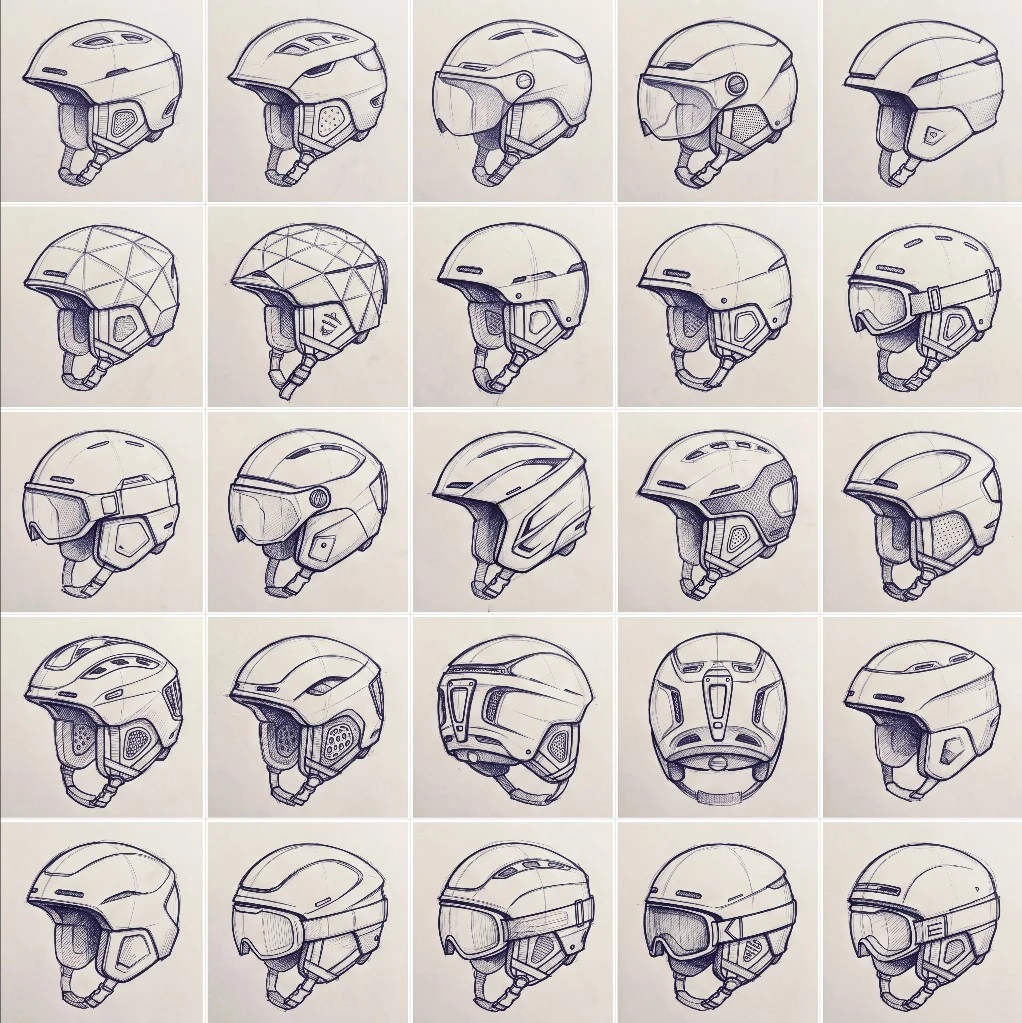
Lay a whole field of directions out in one generation — up to 64 variations on one sheet. Judge silhouette, composition and colour side by side, and pull the ones worth pursuing straight off it.
New models arrive every month, and each is good at different things. Äng keeps a curated set: where one model is clearly best for an operation, it is already chosen — and where it is a matter of taste, the choice is yours.
Äng’s agent is always with you on the canvas, helping you explore directions, generate variations, compare options and refine ideas without leaving your flow.
Not automation. Exploration.
AI helps create the dots. You connect them.
Pricing
You will not be asked for a card during the beta. So that the day we start charging is not a surprise, here is the whole model up front.
Free
What you get today, by invitation.
Roughly what the allowance makes
€19/mo
The rate you are offered when billing opens.
Roughly what that makes a month
€29–199/mo
The public plans, once the beta ends.
Roughly what that makes a month
Prices in EUR, excluding VAT. Credits pay for the compute behind every image, video and 3D model — everything else on the canvas is unmetered. Image counts are approximate: they assume you spend the whole allowance generating on one model, and video, 3D and the larger models draw on the same credits. We will give notice well before anything starts costing money. See how credits work
Before you put client work in it
New accounts start in No Training mode, and strict ZDR — which routes each generation only through providers under zero-data-retention controls — is a single setting. Tighten to ZDR or widen the model catalogue whenever you decide.
Äng never trains models on your content and never shares it for advertising. Whether third-party AI providers may, follows the mode you pick — the default No Training mode routes only through providers that disallow it. Every provider that can touch a generation is named on the subprocessors page.
You keep whatever rights you hold in everything you upload and create. We take only the licence needed to run the service for you.
Äng is opening to a small group of designers, art directors, product teams and creative studios — whether you already work with AI or have not found a way in yet.
Get in before launch, use it on real work, and tell us what works, what breaks and what is missing.